7 Best EPUB Readers for Ubuntu in 2026 (Free & Open Source)
Imad Uddin
Developer
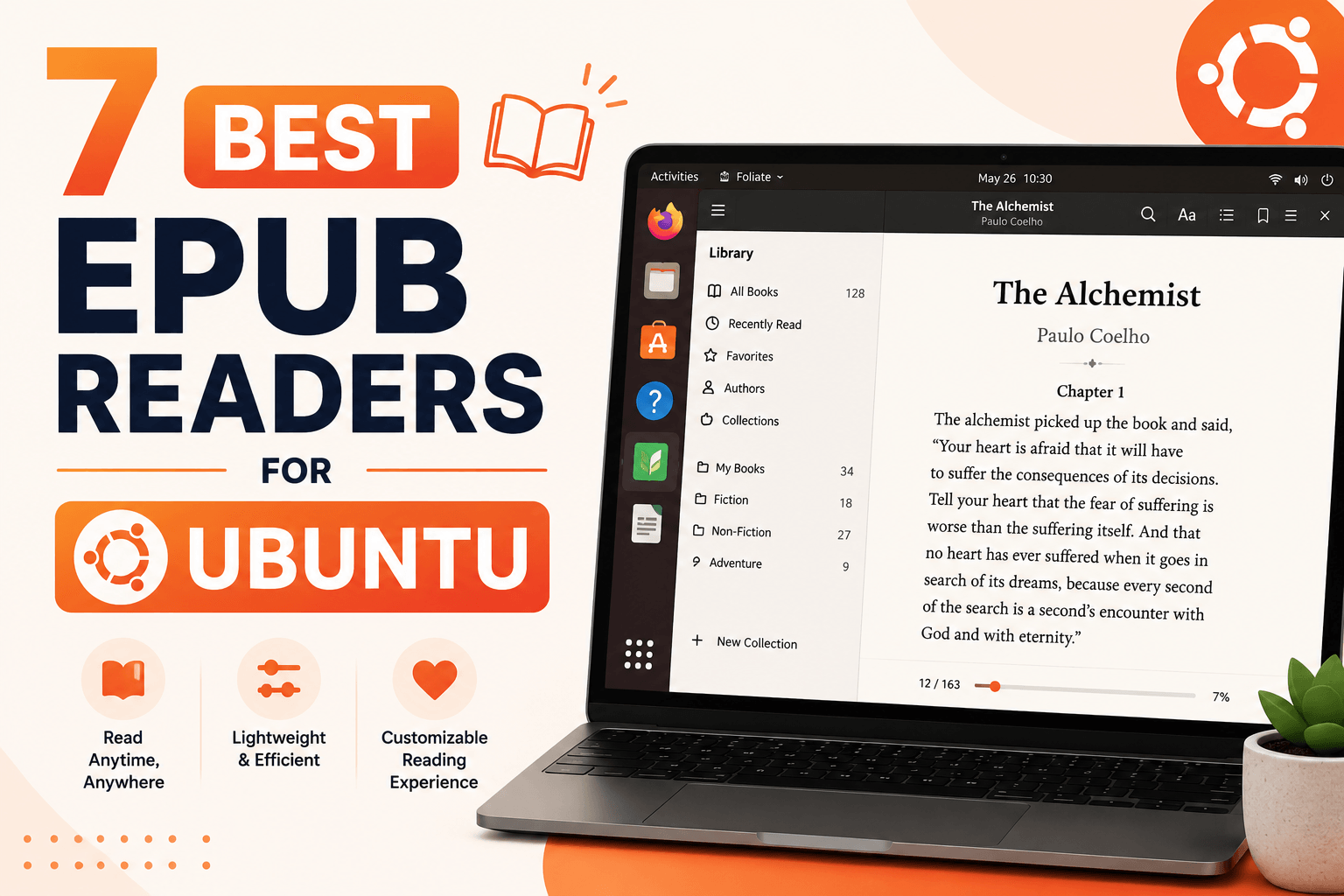
Ubuntu doesn't include a dedicated EPUB reader by default. Document Viewer (Evince) opens EPUB files but lacks features like library management and customization. Third-party readers provide better experiences.
Foliate is a native GNOME app built for Ubuntu. It launches instantly, integrates with system themes, and uses minimal RAM. Calibre manages thousands of ebooks with format conversion and metadata editing. Both are free and open-source.
The right reader depends on your needs. Casual readers want native apps with clean interfaces. Power users need library management and format conversion. Accessibility-focused readers need screen reader support. This guide covers seven EPUB readers tested on Ubuntu 24.04 LTS with GNOME and KDE.
1. Foliate (Best Native GNOME App)
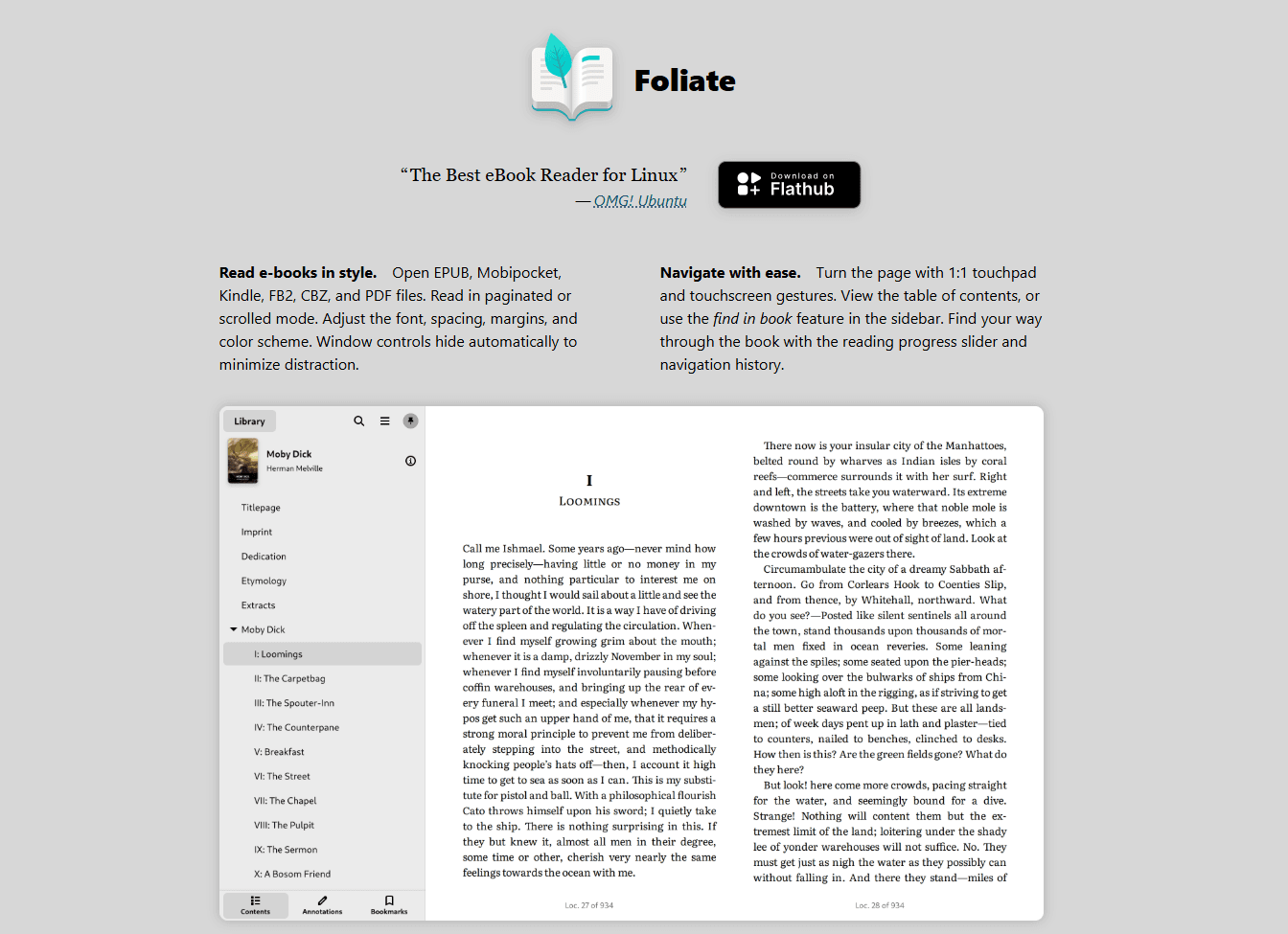
Foliate is a modern EPUB reader built for GNOME. Native GTK4 app with clean interface and system integration.
Install: sudo apt install foliate or via Flatpak: flatpak install flathub com.github.johnfactotum.Foliate
What you get:
- Native GNOME app (GTK4)
- Launch time under 1 second
- Memory usage 60-100MB
- Format support (EPUB, MOBI, AZW, FB2, CBZ)
- Highlights and annotations
- Bookmarks and reading progress
- Dictionary lookup (offline dictionaries)
- Text-to-speech (via Speech Dispatcher)
- Customizable fonts and themes
- Dark mode (follows system theme)
- OPDS catalog support (online libraries)
- Popup footnotes
- Auto-hyphenation
What you don't get:
- No library management
- No format conversion
- No sync across devices
- No metadata editing
Foliate fits Ubuntu users who want a native GNOME app. The interface integrates with system themes. Launch time is instant. Memory usage is minimal compared to Electron-based readers.
2. Calibre (Best for Library Management)
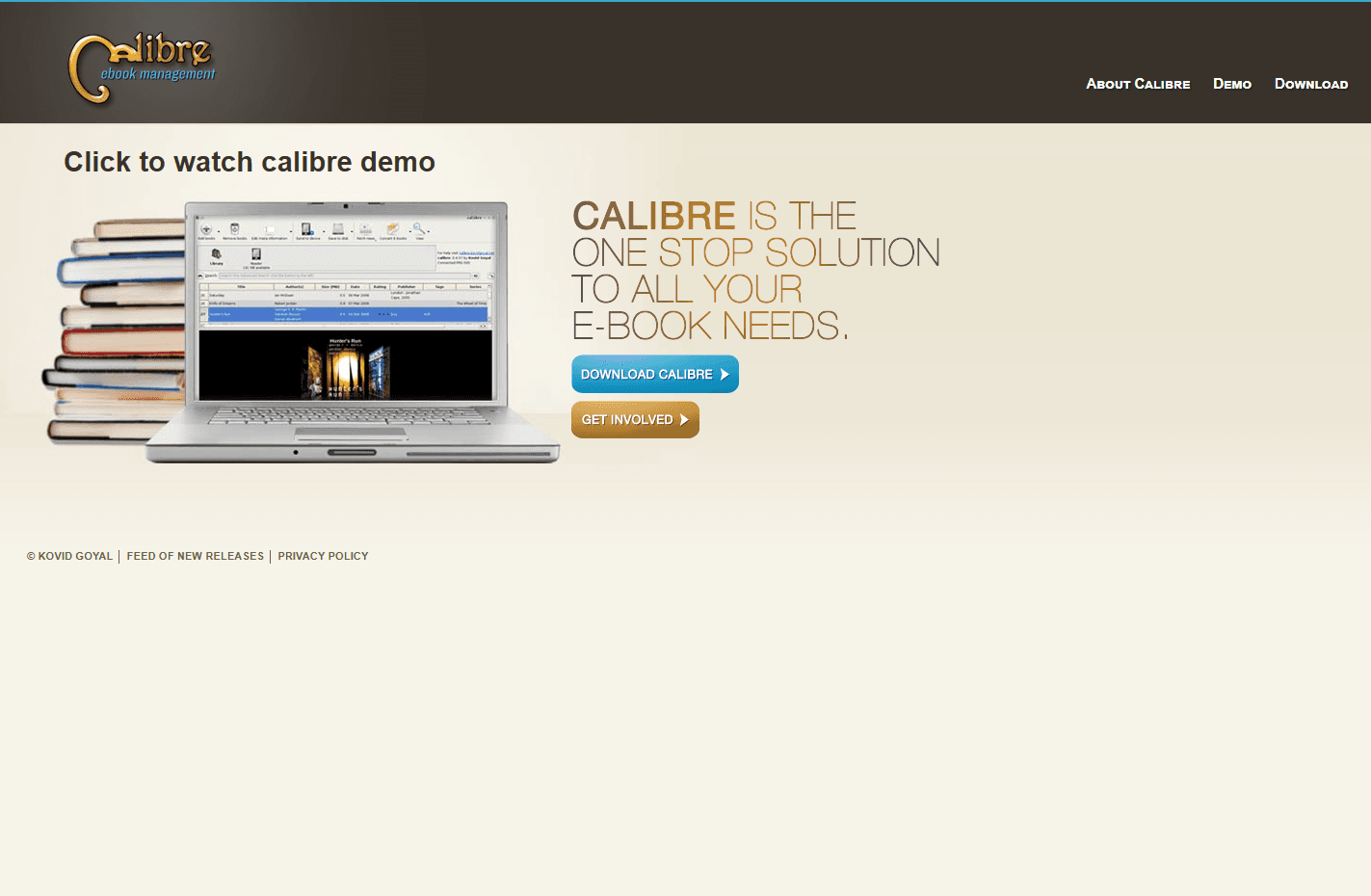
Calibre is a free, open-source ebook manager. Handles thousands of books with format conversion, metadata editing, and device sync.
Install: sudo apt install calibre or download from calibre-ebook.com
What you get:
- Library management for thousands of books
- Format conversion (EPUB, MOBI, AZW3, PDF, and 20+ formats)
- Metadata editing (covers, authors, tags, series)
- Built-in EPUB reader with customization
- Device sync (Kindle, Kobo, Nook)
- News download (convert websites to ebooks)
- Plugin ecosystem for extended features
- Search and filter by any metadata field
- Duplicate detection
- Launch time 2-3 seconds
- Memory usage 150-250MB
What you don't get:
- Interface not native (Qt-based)
- Heavy for casual reading
- Steeper learning curve
- No cloud sync (manual only)
Calibre fits power users who manage large ebook collections. Format conversion works flawlessly. Metadata editing keeps libraries organized. If you have 100+ ebooks, Calibre is essential.
3. Thorium Reader (Best for Accessibility)
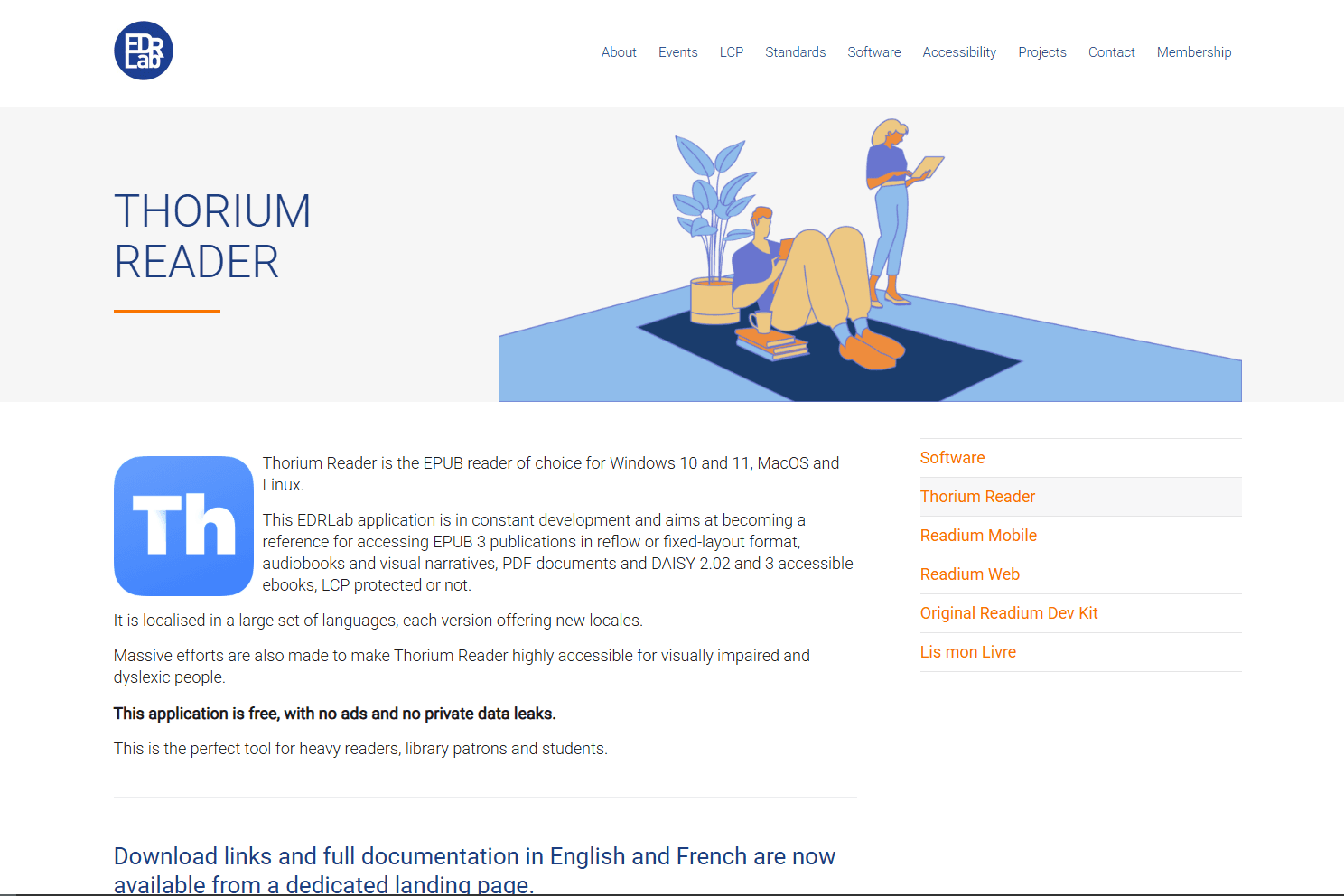
Thorium Reader is a free, open-source EPUB reader built for accessibility. WCAG 2.1 compliant with screen reader support.
Install: Download .deb from edrlab.org or via Flatpak: flatpak install flathub io.github.edrlab.thorium
What you get:
- Screen reader support (Orca compatible)
- Text-to-speech with adjustable speed
- Customizable text size, spacing, and layout
- High-contrast modes and color themes
- Keyboard navigation (full keyboard control)
- EPUB 3 support with media overlays
- Audiobook support
- LCP DRM support (library ebooks)
- OPDS catalog support
- Launch time under 2 seconds
- Memory usage 100-150MB
What you don't get:
- Not native (Electron-based)
- No library management
- No format conversion
- No sync across devices
Thorium Reader fits users who need accessibility features. Screen reader support works with Orca. Text customization helps dyslexic readers. Library ebook support (LCP DRM) works with public libraries.
4. Okular (Best for KDE Users)
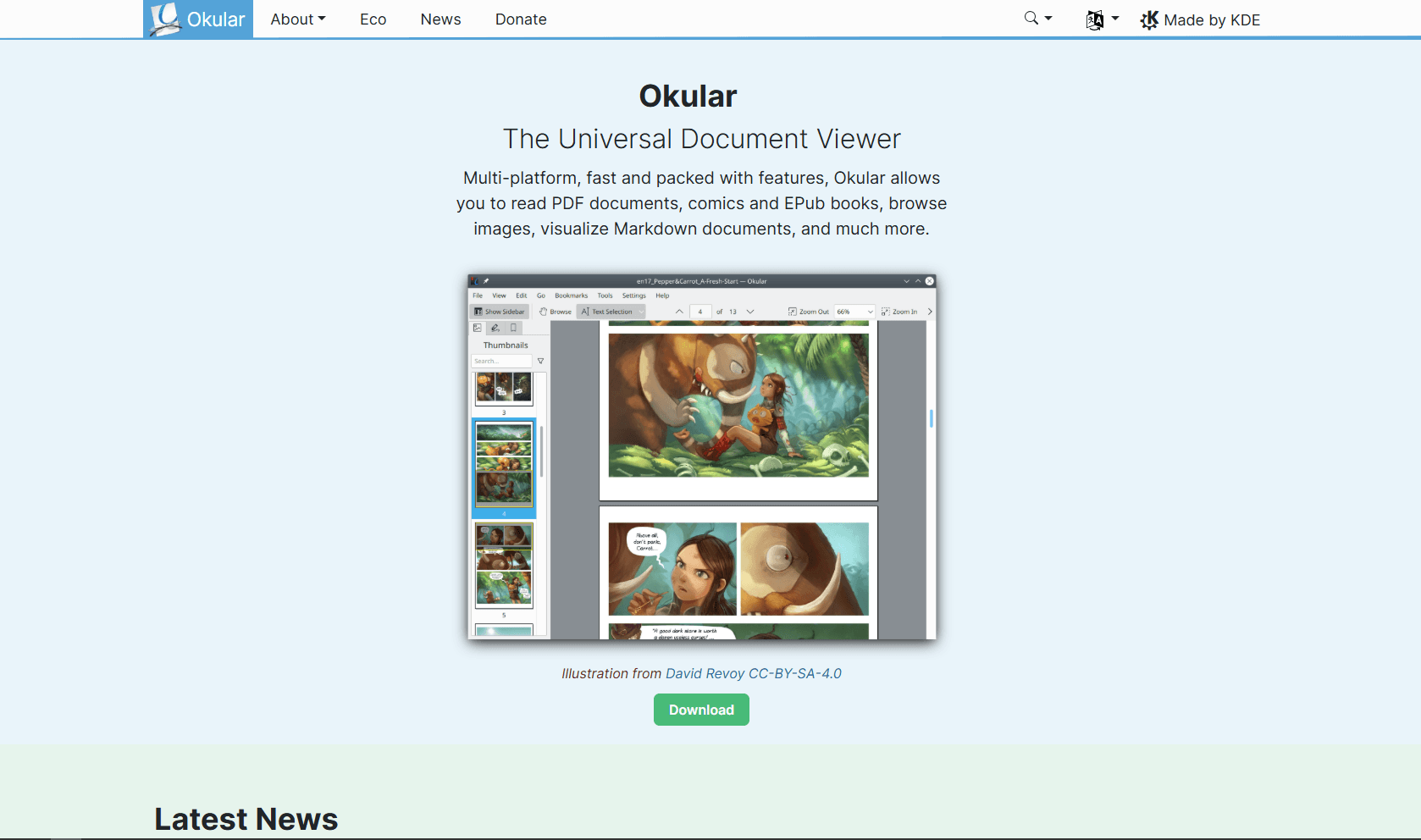
Okular is KDE's universal document viewer. Handles EPUB, PDF, and many other formats.
Install: sudo apt install okular (pre-installed on Kubuntu)
What you get:
- Native KDE app (Qt-based)
- Format support (EPUB, PDF, DjVu, CHM, XPS, and more)
- Annotations and highlights
- Bookmarks
- Text selection and search
- Form filling (for PDFs)
- Digital signatures (for PDFs)
- Launch time under 1 second
- Memory usage 80-120MB
- Integrates with KDE desktop
What you don't get:
- No library management
- No format conversion
- No sync
- EPUB support basic (better for PDFs)
Okular fits KDE/Kubuntu users who want a native document viewer. The interface integrates with KDE themes. EPUB support works but is basic compared to dedicated readers.
5. FBReader (Best for Cross-Platform Sync)
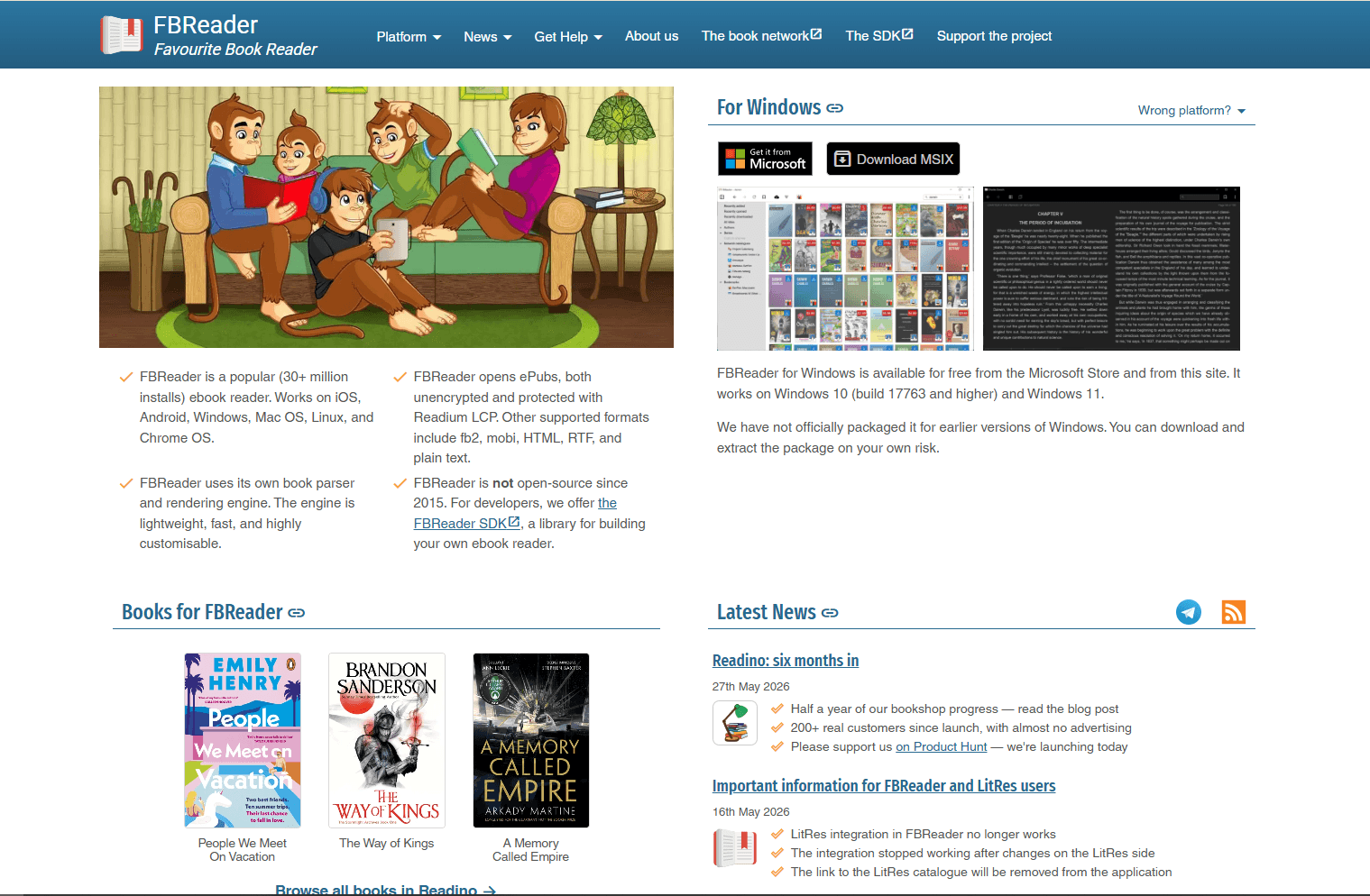
FBReader is a free ebook reader with cloud sync. Syncs across Ubuntu, Windows, Mac, Android, and iOS.
Install: sudo apt install fbreader or download from fbreader.org
What you get:
- Cloud sync across all platforms (FBReader account)
- Format support (EPUB, MOBI, FB2, HTML, TXT)
- Network libraries (OPDS catalogs)
- Highlights and bookmarks with sync
- Customizable fonts and themes
- Reading positions sync
- Launch time under 2 seconds
- Memory usage 80-120MB
What you don't get:
- No library management
- No format conversion
- Sync requires FBReader account
- Interface dated
FBReader fits users who read on multiple platforms. Cloud sync works across Ubuntu, Windows, Mac, Android, and iOS. Reading position syncs automatically.
6. Bookworm (Best Lightweight Alternative)
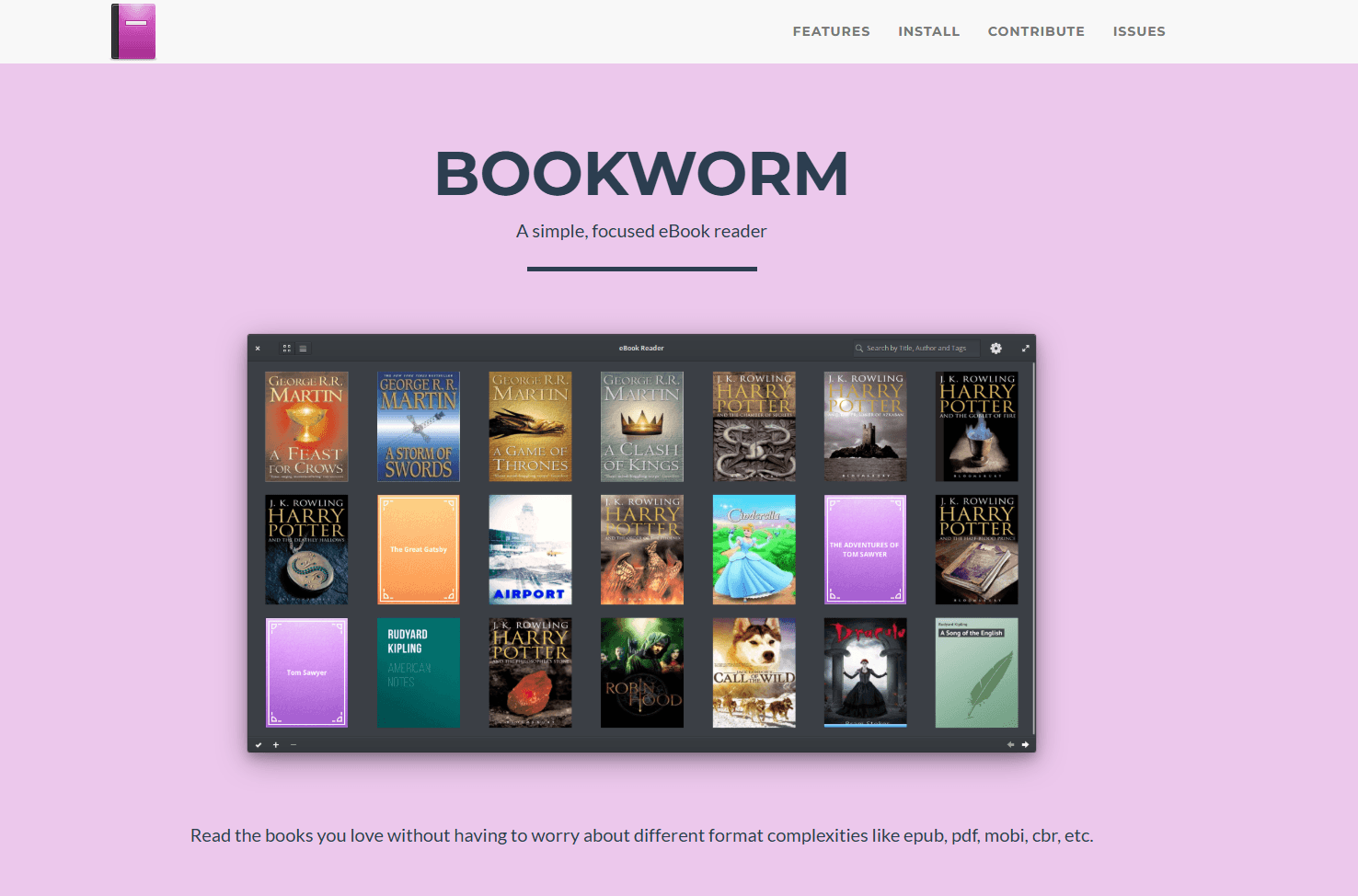
Bookworm is a simple, lightweight ebook reader for Ubuntu. Native GTK app with minimal interface.
Install: sudo apt install bookworm or via Flatpak: flatpak install flathub com.github.babluboy.bookworm
What you get:
- Native GTK app
- Launch time under 1 second
- Memory usage 40-80MB
- Format support (EPUB, PDF, MOBI, CBR, CBZ)
- Library with collections
- Bookmarks and annotations
- Reading progress tracking
- Customizable fonts and themes
- Dark mode
What you don't get:
- No format conversion
- No sync
- No advanced features
- Development less active
Bookworm fits users who want a lightweight, simple EPUB reader. The interface is cleaner than Calibre. Memory usage is minimal. Good for casual reading without library management overhead.
7. KOReader (Best for E-Ink Displays)
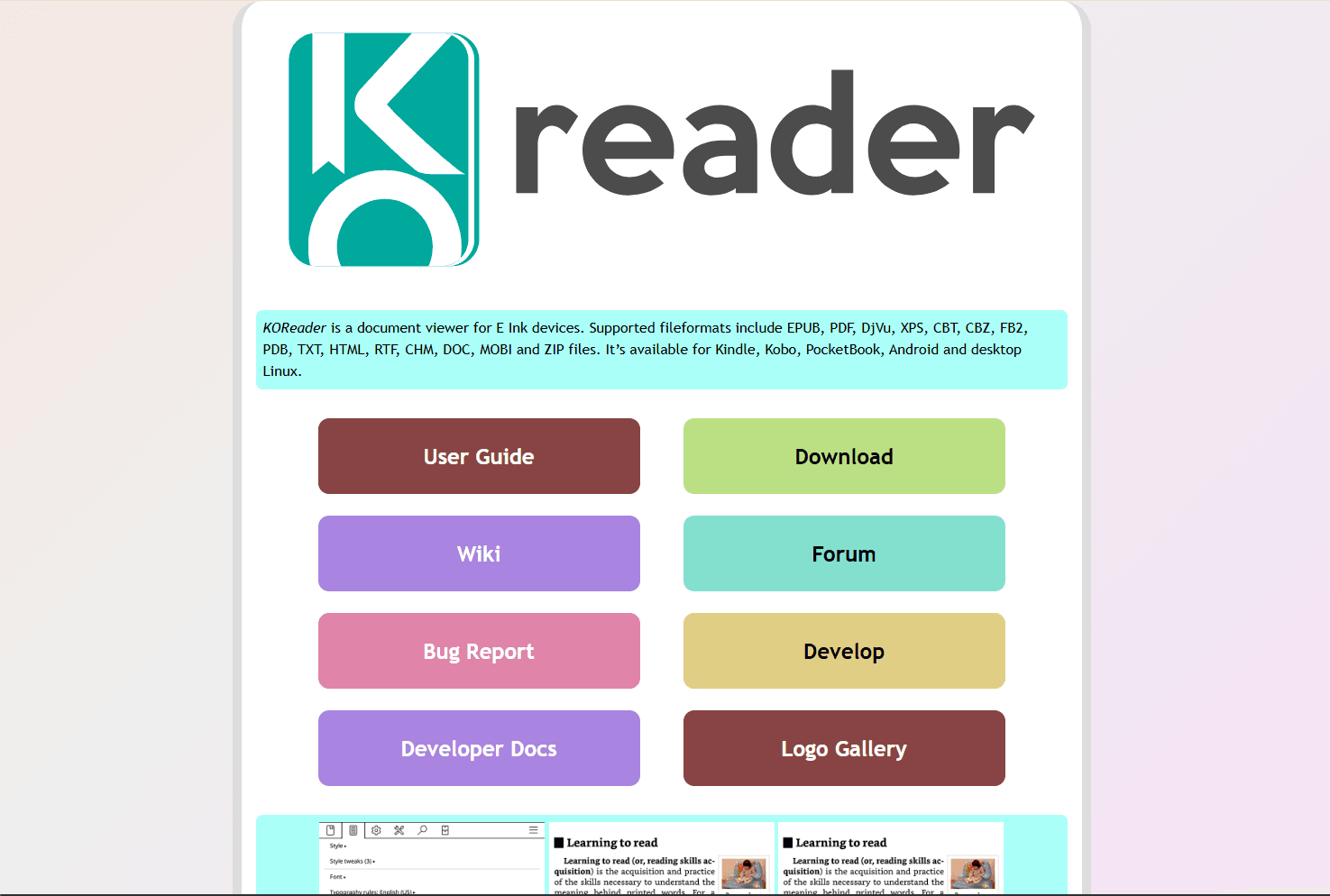
KOReader is an ebook reader optimized for e-ink displays. Also works on desktop Ubuntu.
Install: Download AppImage from koreader.rocks or via Flatpak: flatpak install flathub rocks.koreader.KOReader
What you get:
- Format support (EPUB, PDF, DjVu, CBZ, FB2, MOBI, and more)
- Reflow engine for PDFs
- Customizable fonts and margins
- Dictionary lookup
- Highlights and annotations
- Reading statistics
- OPDS catalog support
- Optimized for e-ink displays
- Launch time 2-3 seconds
- Memory usage 100-150MB
What you don't get:
- Interface designed for e-ink (not ideal for desktop)
- No library management
- No sync
- Steeper learning curve
KOReader fits users with e-ink displays or those who want advanced PDF reflow. The interface is optimized for e-ink but works on desktop. PDF reflow works better than most readers.
EPUB Reader Comparison Table
| Reader | Native? | Launch time | RAM usage | Library management | Best for |
|---|---|---|---|---|---|
| Foliate | Yes (GTK4) | <1 sec | 60-100MB | No | GNOME users |
| Calibre | No (Qt) | 2-3 sec | 150-250MB | Excellent | Power users |
| Thorium Reader | No (Electron) | <2 sec | 100-150MB | No | Accessibility |
| Okular | Yes (Qt) | <1 sec | 80-120MB | No | KDE users |
| FBReader | No | <2 sec | 80-120MB | Basic | Cross-platform sync |
| Bookworm | Yes (GTK) | <1 sec | 40-80MB | Basic | Lightweight |
| KOReader | No | 2-3 sec | 100-150MB | No | E-ink displays |
Which EPUB Reader Should You Actually Use?
For GNOME/Ubuntu users, Foliate is the best choice. Native GTK4 app, instant launch, minimal RAM usage, and system theme integration.
For power users with large ebook collections, Calibre is essential. Format conversion, metadata editing, and library management work flawlessly.
For accessibility needs, Thorium Reader provides screen reader support and text customization. WCAG 2.1 compliant with Orca compatibility.
For KDE/Kubuntu users, Okular integrates with KDE desktop. The interface follows KDE themes and conventions.
For cross-platform sync, FBReader syncs across Ubuntu, Windows, Mac, Android, and iOS.
For lightweight reading, Bookworm launches instantly and uses 40-80MB RAM.
For e-ink displays or advanced PDF reflow, KOReader provides better PDF handling than most readers.
Using more than one reader is normal. Foliate for casual reading, Calibre for library management, Thorium Reader for accessibility needs.
Platform-Specific Tips for Ubuntu
Installation methods:
- APT: sudo apt install foliate calibre okular fbreader bookworm
- Flatpak: flatpak install flathub com.github.johnfactotum.Foliate
- Snap: sudo snap install calibre
- AppImage: Download and run (no installation needed)
GNOME integration: Foliate and Bookworm integrate with GNOME:
- Follow system dark mode
- Use GNOME file picker
- Integrate with GNOME search
- Support GNOME keyboard shortcuts
KDE integration: Okular integrates with KDE Plasma:
- Follow KDE color schemes
- Use KDE file picker
- Integrate with KDE search (Baloo)
- Support KDE keyboard shortcuts
File associations: Set default EPUB reader:
- Right-click any EPUB file
- Select "Properties"
- Go to "Open With" tab
- Select your preferred reader
- Click "Set as default"
Cloud storage integration: Store EPUBs in Nextcloud, Dropbox, or Google Drive for access across devices. Foliate and Bookworm open files from cloud folders.
Command-line tools:
- Convert EPUB to PDF: ebook-convert book.epub book.pdf (Calibre)
- Extract EPUB metadata: ebook-meta book.epub (Calibre)
- Validate EPUB: epubcheck book.epub (install via sudo apt install epubcheck)
Frequently Asked Questions
What's the best free EPUB reader for Ubuntu?
Foliate for GNOME users or Calibre for power users. Foliate is a native GTK4 app with instant launch, minimal RAM usage (60-100MB), and system theme integration. Install with sudo apt install foliate. Calibre provides library management, format conversion, and metadata editing. Install with sudo apt install calibre. Both are free and open-source.
Does Ubuntu have a built-in EPUB reader?
Yes, but basic. Document Viewer (Evince) opens EPUB files but lacks features like annotations, customization, and library management. For better experience, install Foliate (sudo apt install foliate) for native GNOME app or Calibre (sudo apt install calibre) for library management. Foliate is recommended for most Ubuntu users.
How do I open EPUB files on Ubuntu?
Three options: 1) Use Document Viewer (pre-installed, right-click EPUB > "Open With" > "Document Viewer"). 2) Install Foliate (sudo apt install foliate) for native GNOME experience. 3) Install Calibre (sudo apt install calibre) for library management. Foliate is best for casual reading. Calibre is best for large collections.
Can I convert EPUB to PDF on Ubuntu?
Yes. Use Calibre for best results. Install Calibre (sudo apt install calibre), add your EPUB file, select it, click "Convert books", choose PDF as output format, and click OK. Calibre preserves formatting and images. For command-line conversion, use ebook-convert book.epub book.pdf (requires Calibre installed).
What's the best EPUB reader for large libraries on Ubuntu?
Calibre. It handles thousands of books with search, filtering, and metadata editing. Format conversion works for EPUB, MOBI, AZW3, PDF, and 20+ formats. Device sync works with Kindle, Kobo, and Nook. Plugin ecosystem extends functionality. Install via sudo apt install calibre. Memory usage is 150-250MB. Launch time is 2-3 seconds.
Does Calibre work well on Ubuntu?
Yes. Calibre runs natively on Ubuntu with full functionality. Library management, format conversion, and device sync work flawlessly. The interface uses Qt (not native GTK) but performance is excellent. Memory usage is 150-250MB. Launch time is 2-3 seconds. For large libraries (1000+ books), Calibre is the best option on Ubuntu.
How do I sync EPUB books across Ubuntu and Android?
Use FBReader with cloud sync or store EPUBs in Nextcloud/Dropbox. FBReader syncs reading position across Ubuntu, Android, iOS, Windows, and Mac (requires FBReader account). Install on Ubuntu: sudo apt install fbreader. For manual sync, store EPUBs in Nextcloud or Dropbox and access from both devices.
What's the best EPUB reader for accessibility on Ubuntu?
Thorium Reader. It's WCAG 2.1 compliant with Orca support, text-to-speech with adjustable speed, customizable text size and spacing, high-contrast modes, and full keyboard navigation. Free and open-source. Install via Flatpak: flatpak install flathub io.github.edrlab.thorium or download .deb from edrlab.org.
Related Reading
Using a different platform? See platform-specific EPUB reader guides:
- Best EPUB readers for Mac for macOS options
- Best EPUB readers for Windows for Windows 11 and 10
For other file formats on Ubuntu:
Read More
All Articles
8 Best EPUB Readers for Android in 2026 (Free & Paid)
Find the best EPUB reader for Android with library management, annotations, and sync. Compare Moon+ Reader, ReadEra, Google Play Books, and more for reading ebooks on phones and tablets.
7 Best EPUB Readers for Chromebook in 2026 (Free & Paid)
Find the best EPUB reader for Chromebook with Android apps, Chrome extensions, and Linux apps. Compare Google Play Books, ReadEra, EPUBReader, and more for reading ebooks.
8 Best EPUB Readers for iPhone & iPad in 2026 (Free & Paid)
Find the best EPUB reader for iPhone and iPad with iCloud sync, Apple Pencil support, and split-screen multitasking. Compare Apple Books, KyBook 3, LiquidText, and more for iOS reading.